
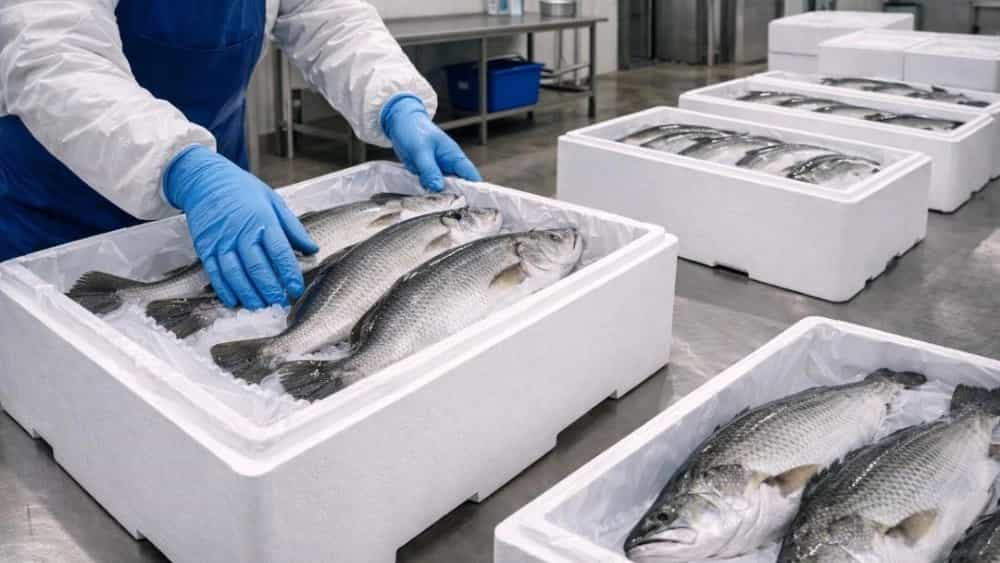
Farmed carp is one of the important products of the aquaculture industry, which is in the attention of buyers in the domestic market and regional trade due to the possibility of production in high volume, convenient access to breeding farms and the ability to supply it in live, fresh and frozen form. The price of buying and selling exported farmed carp depends on various factors such as the weight of each piece, meat quality, fish health, breeding method, order volume and transportation conditions. For this reason, a fixed rate cannot be considered for all shipments.
Major buyers, trading companies, exporters and aquatic market operators usually check product specifications and delivery conditions before placing an order. On the other hand, for profitable sales, growers must know the daily market price, production cost and standards required by domestic and foreign customers.
In this article, we examine the factors affecting the price of farmed carp, the bulk purchase method, export sales conditions, and important points for choosing a supplier.
What is the price of buying and selling exported farmed carp?
The price of farmed carp for export is determined based on the specifications of the shipment and the agreement between the seller and the buyer. For example, the price of live fish delivered to the farm door is different from that of freshly cleaned, packaged or frozen fish. Also, fish that are uniform in weight and size are usually more suitable for bulk and export orders.
In the price lists published in the Iranian market, different figures have been reported for farmed carp weighing about one to one and a half kilograms; For example, one price list includes figures of 360 to 435 thousand tomans for different forms of supply, while other lists provide different figures. This difference shows that retail price, wholesale price and farm gate purchase rate should not be considered the same. These figures are not considered the final export rate or pre-invoice of the day.
To know the real price of buying and selling exported farmed carp, the following should be clear:
- Average weight of each piece of fish
- Number or tonnage required
- Whether the product is live, fresh, cleaned or frozen
- Loading place and delivery destination
- Type of packaging and storage conditions
- Carriage, loading and required permits
- Delivery time and payment method
Therefore, the best pricing method is for the buyer to declare the exact specifications of the product and get pre-invoices from several reliable suppliers.
The most important factors influencing the price of exported carp fish
The final price of carp is not only limited to the breeding cost. Product quality, supply conditions and post-harvest costs also play a role in determining the sales rate.
1. Fish weight and size
Weight is one of the most important grading criteria for carp. Bulk buyers usually declare their desired weight before purchase; Because the size of the fish affects the type of packaging, the way of consumption and the target market.
If a shipment consists of fish of similar weight, it will be easier to grade and pack. On the other hand, the large difference in the size of the fish can increase the cost of separation and preparation.
2. Product quality and health
Fish health, good appearance, freshness, natural smell and absence of disease symptoms are the main purchasing criteria. In export transactions, the quality of the product must match the specifications agreed by the buyer.
Fish from farms with proper health management and clear breeding and harvesting records are more reliable for commercial transactions.
3. supply type; Live, fresh or frozen
Carp fish can be offered in different forms:
- Live carp: It is suitable for markets that have the infrastructure to transport and store live fish.
- Fresh carp: After harvesting, it is supplied with hygienic principles and the use of ice or cooling equipment.
- Cleaned carp: Parts such as gills and abdominal contents are separated, according to the buyer's order.
- Frozen carp: for storage. It is longer and used for transportation in specific routes.
Each of these modes have different preparation and shipping costs; Therefore, when comparing prices, the type of product must be exactly the same.
4. Order volume and contract terms
Purchasing in high tonnage can reduce the side costs of each kilogram of product; But the amount of the discount depends on the supply capacity of the farm, the cost of transportation and the terms of payment.
For continuous orders, a periodic supply contract can help the buyer and manufacturer to better manage the harvesting schedule, product quantity and delivery time.
5. Harvest season and supply
In some periods, the harvest volume of farms increases and the product supply in the market increases. On the other hand, a decrease in supply or an increase in seasonal demand may affect the price.
For this reason, the price inquiry should be done close to the time of purchase, and the old rates should not be the definitive basis of the transaction.
Bulk purchase of farmed carp fish from farms
Purchasing directly from fish farms is one of the methods of providing products for wholesalers, aquatic stores and export companies. In this method, the buyer can coordinate the specifications of the cargo with the producer and agree on the time of harvest, the weight of the fish and the way of loading.
To buy carp in bulk, it is better to do the following steps:
- Determining the order quantity: First determine the required tonnage or quantity.
- Choosing the appropriate weight: Determine the weight range of each piece according to the target market.
- Farm inspection: Make sure the production capacity, maintenance conditions and health status of the farm.
- Sampling and evaluation: Check the quality, health and uniformity of the fish.
- Receive the pre-invoice: Get the price, delivery location, additional costs and payment terms in writing.
- Shipping coordination: Prepare the vehicle and equipment suitable for the type of product before pickup.
Direct purchase is most beneficial when the volume of the order is in harmony with the production capacity of the farm and the costs of transportation and preparation are determined from the beginning.
Sales conditions of farmed carp fish for export
Carp export sales are different from regular sales in the domestic market. In foreign transactions, in addition to the price, the buyer pays attention to the specifications of the species, quality, health, packaging, traceability and import regulations of the destination country.
In order to increase the chances of sales, the manufacturer or exporter should check the needs of the target market before launching the product.
Selection of species and detailed specifications of the product
One of the important points in the export of carp is to specify the exact species. Common carp is known by the scientific name Cyprinus carpio and should not be confused with species such as carp, grass carp or silver carp.
These species differ in terms of biological characteristics, product characteristics and commercial categories. Therefore, the exact name of the species should be included in the pre-invoice, sales invoice, shipping documents and product label.
Packaging and storage
Packaging should be in harmony with the form of product supply and shipping conditions. For fresh fish, it is very important to maintain the cold chain and prevent contamination. For the frozen product, the storage temperature, freezing quality, type of packaging and the health of the cartons must be controlled.
Information on the packaging may include the following:
- Exact name of fish species
- Net weight and gross weight
- Country and place of production
- Date of production or harvest
- Date of freezing and expiration, if used
- Storage conditions
- Batch number or tracking code
- Producer or packer specifications
Health and export requirements
Fish export requirements are different according to the destination country. Veterinary approval, health certificate, tracking documents, packaging requirements and microbial or contaminant controls may be required.
For example, the export of fishery products to the EU market is subject to country and authorized production unit regulations, food hygiene, official certifications and supply chain control. Therefore, before concluding the contract, the regulations of the destination country must be checked.
Target markets for the sale of Iranian carp fish
The export target market should be selected based on actual demand, shipping cost, import regulations and continuous supply capacity. Geographical proximity can be effective in reducing shipping costs; Especially for live or fresh products, where the transfer time plays an important role in its quality.
According to the trade data registered in the World Bank database, in 2023, Iran has exported about 438,815 kilograms of live carp worth approximately 447 thousand dollars. Iraq and the Republic of Azerbaijan have been among the registered destinations of these shipments. This statistic is related to live carp and the same year and should not be considered as the total export statistics of carp types or the definite market situation this year.
The following sources can be used to investigate potential markets:
- WITS database of the World Bank for checking trade statistics between countries
- UN Comtrade system for viewing import and export data
- FAO database for species and fisheries information
- Codex Alimentarius database for checking international food standards
How to calculate the export price of carp fish?
The export price should be calculated in such a way that it covers all the costs of production, preparation and delivery of the product and leaves a good profit margin for the seller.
The simple formula for calculating the finished price of each kilogram of product is as follows:
Fixed price = cost of purchase or production + cost of preparation + packaging + shipping + costs of documents and permits + other transaction costs
After calculating the final price, the profit intended by the seller is added to it. Of course, customs fees, insurance, international shipping and delivery responsibility should be specified based on the terms of the contract and Incoterms.
For example, if the seller delivers the fish live and at the farm gate, the export processing and packaging costs may be borne by the buyer. But if the product is sold frozen and ready for export, more costs will be included in the final price.
For this reason, announcing the price without specifying the place of delivery and the conditions of the transaction can cause a difference between the buyer and the seller.
Important points for choosing an export carp seller
Don't just pay attention to the low price before buying. Improper quality or delay in delivery can impose more costs on the buyer than the slight price difference.
To choose the right supplier, check the following:
- Activity record and continuous supply capacity
- Actual capacity of production and harvest
- Possibility of providing required weights
- Health and quality of fish
- Possibility of visit or sampling before purchase
- Observance of transportation and storage principles
- Transparency in price announcement and side costs
- Providing documents and documents required for the transaction
Also, it is better to clearly record the type of fish, weight range, order amount, possible loss percentage, delivery time, weighing method and settlement conditions in the contract.
summary; Safe buying and selling of farmed carp for export
The buying and selling price of exported farmed carp is influenced by weight, quality, type of supply, order volume, harvesting season and transportation costs. To get the right price, product specifications and delivery conditions should be clear from the beginning.
Major buyers can reduce transaction risk by directly inspecting farms, evaluating quality and comparing valid pre-invoices. On the other hand, growers will have more opportunities for direct sales and exports by grading the product, maintaining quality after harvest and preparing documents required by the target market.
If you intend to wholesale or sell farmed carp for export, it is better to specify the weight, tonnage, supply type and delivery destination before finalizing the transaction. By providing this information, you can get a more accurate price and make the terms of cooperation more transparent.
Frequently asked questions about the price of farmed carp for export
1. How is the price of farmed carp for export determined?
The price is determined based on the weight of each piece, quality, fish health, supply type, order volume, delivery location, and shipping and packaging costs. In order to receive an accurate rate, the details of the cargo and the delivery destination must be announced.
2. Is it more economical to buy carp directly from the farm?
In many large orders, direct purchase can reduce the cost of mediation. However, the cost of transportation, loading, possible losses and preparation of the product must also be calculated to determine the true economic benefit.
3. What documents are required to export farmed carp?
Required documents depend on the country of destination and the form of product supply. Commercial and shipping documents, health and veterinary documents, tracking information, and in some markets approvals related to the production unit or packaging are usually required. Before sending the shipment, the import regulations of the destination country should be checked.
